AI search and GEO is fast becoming a significant part of the SEO and optimisation mix.
Clients and retailers frequently ask what levers should be pulled and where attention should be focussed in order to improve visibility in AI search and improve their GEO.
What I always explain is almost half of what improves ecommerce GEO has nothing to do with your website directly and has a lot more to do with how your brand is positioned and presented online.
That being said – do not underestimate the full importance of optimising your website; that’s still critical and has real leverage. However, there’s more to improving visibility in AI search and optimising ecommerce GEO than ensuring your website is optimised.
We’ll get into those specifics shortly.
First, what exactly is ecommerce GEO and what does winning AI search look like for an ecommerce brand?
More of your customers are using AI to research, compare and buy
According to a recent study in October ‘26 by McKinsey & Co., 14% of global AI shoppers have let an AI tool complete a purchase on their behalf.
IBM released research earlier in the year that suggests 41% of US consumers used AI assistants to research products.
What is Ecommerce GEO and what does winning AI search look like?
Ecommerce GEO is essentially optimising your website and your brand’s wider ‘digital footprint’. Done well, this means LLMs like Claude, ChatGPT, Gemini and Google AI Overviews are more likely to recommend your store or products when potential customers are asking:
- What to buy
- Solutions to problems your brand solves and sells
- How they compare to similar goods
- Where to buy and even actually buying them on their behalf
‘Winning’ your share of AI search essentially means being cited more frequently amongst competing and similar retailers, increasing brand mentions during a user’s AI conversational journeys and having LLMs send you more traffic to your website.
What other sources say about you is more influential than you say about yourself
One of the fundamental differences between ‘bread and butter’ SEO and ecommerce GEO is that AI search is influenced and draws data from sources other than the ones that you own verbatim.
Your reviews platforms, your social profiles, podcast features, articles, video content and external data sources paint the picture for LLMs.
When optimising for the ‘ten blue links’ on Google and organic search results, your on-site technical architecture, anchor text, internal links and backlinks are your ranking factors.
That’s one of the most distinctive differences between the two – let me explain with a specific example:
Website A – technically solid, strong domain authority
Positive: Great for organic visibility and capturing organic clicks against relevant keywords and search terms.
Negative: A lack of off-site content and a lacklustre set of social profiles means LLMs are much less likely to recommend website A and its brand to users searching and conversating with AI.
Website B – strong off-site content diversity, excellent social profiles
Positive: AI and LLMs are significantly more likely to recommend website B and its brand where relevant conversations and queries come into play.
Negative: A lack of technical SEO and on-site optimisation means this domain is less likely to rank for competitive search terms; particularly those that demonstrate purchase intent.
Website C – optimises for both AI search and organic search
The way to truly win across all fragments of ecommerce optimisation is to be strong and focussed in both of these spaces.
Strong technical health and cohesive off-site content allow ecommerce brands to capture clicks, citations and impressions across all ‘surfaces’.
Now that those distinctions between AI search and organic search have been drawn, let’s talk about the specifics you can optimise to improve your visibility in AI and LLMs.
How to optimise your ecommerce website for AI search
Fixing JavaScript dependency issues
In a nutshell, AI search bots cannot execute JavaScript. If your site needs JS to be executed in order to reveal on-page content, that’s a real setback for AI optimisation.
Not only that and AI aside; although Google can render JavaScript in order to surface any JS-dependent content, it hurts your site’s technical health too and likely provides a slower experience for your customers.
A working example
Let’s take a look at this website – when JavaScript is enabled in your browser, the website and all its images and content are surfaced and visible:
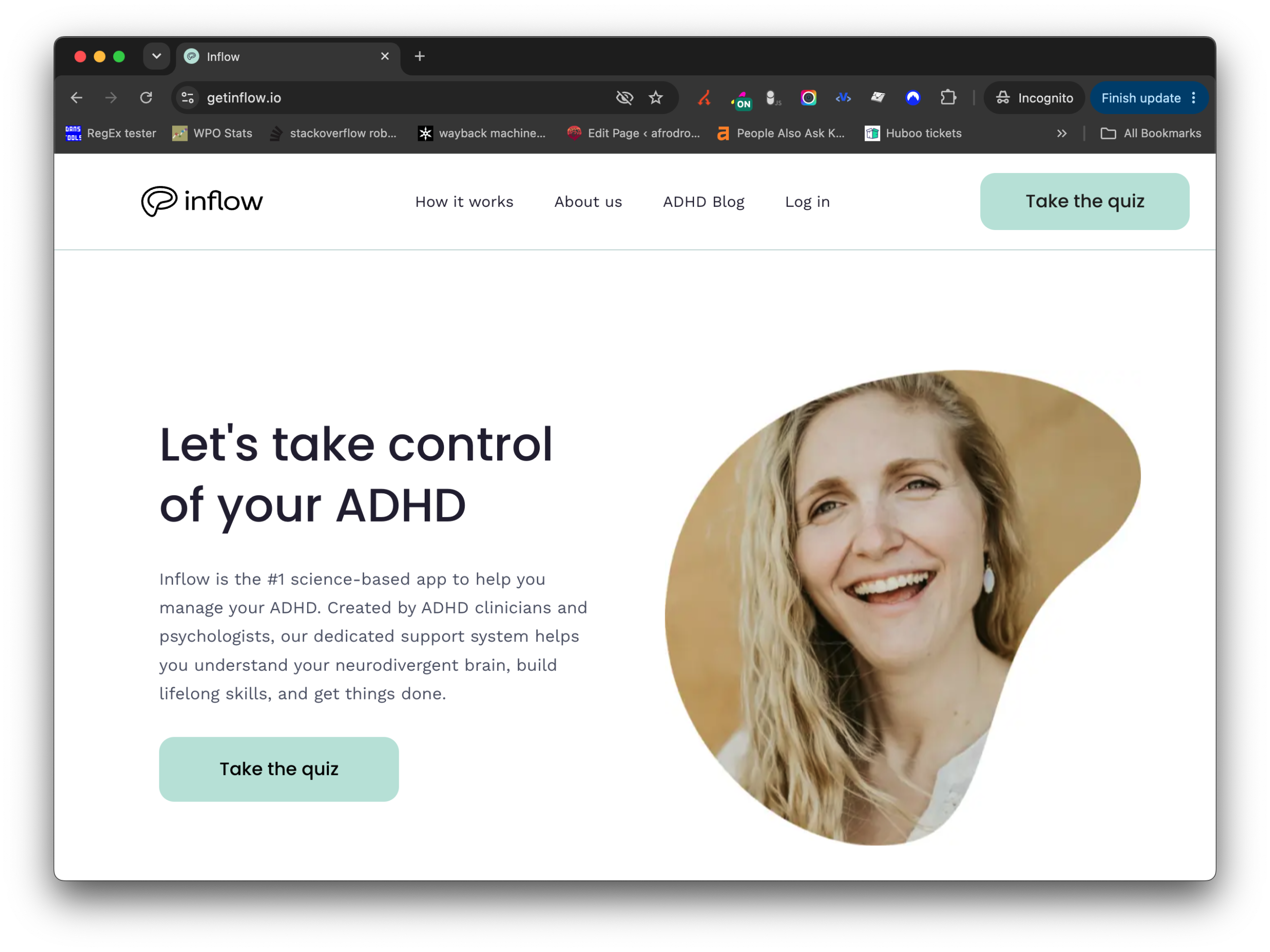
However, with JS disabled (which remember, is how LLMs like ChatGPT and Claude crawl and access websites), all of the critical on-page content is invisible and is missing entirely from the page.
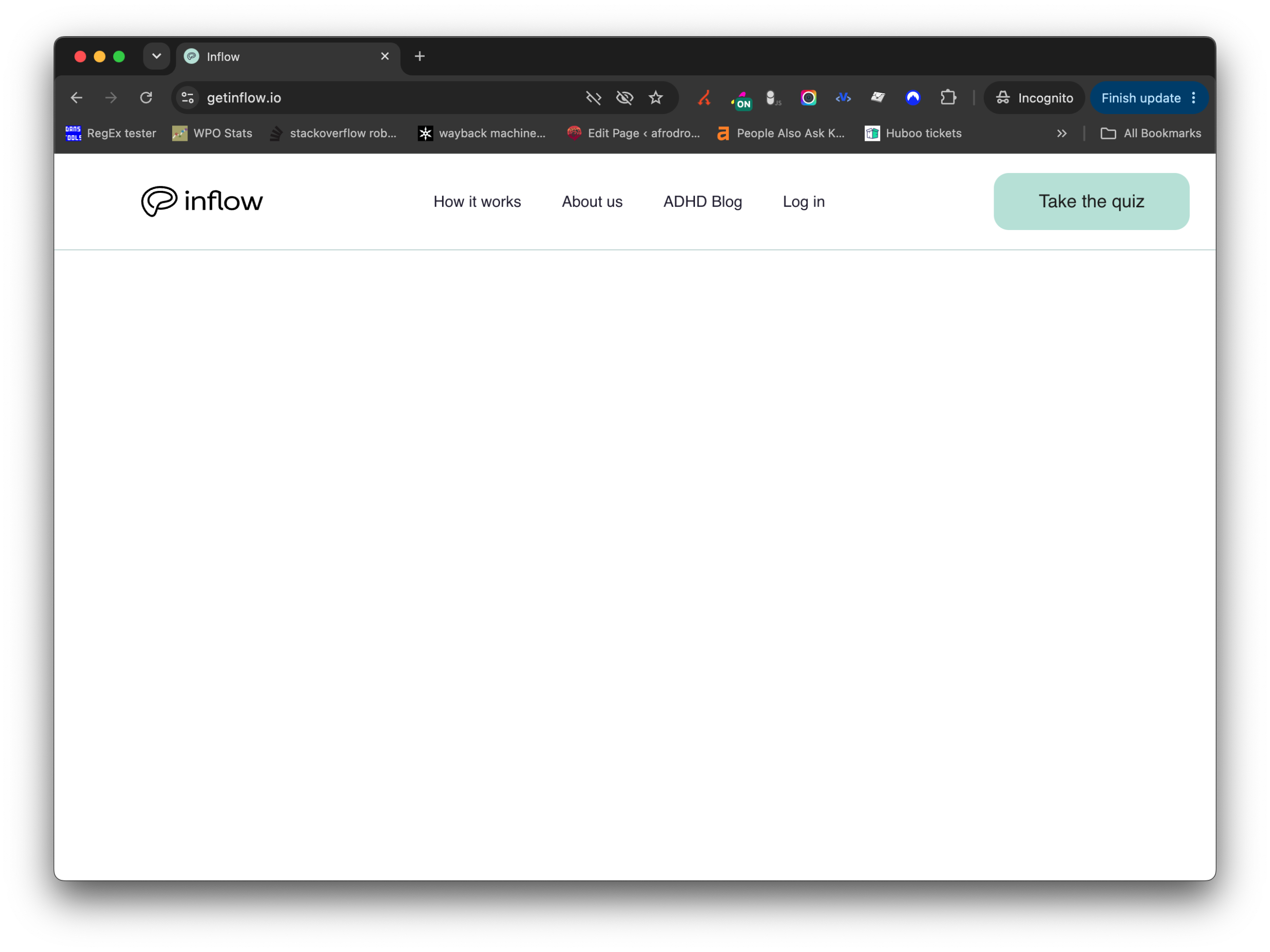
That makes it difficult for LLMs to understand what your website is about.
More importantly, LLMs struggle to understand what problems you solve, what your offering is and what the business even does.
Let’s take a look at a specific (and more extreme) ecommerce example:
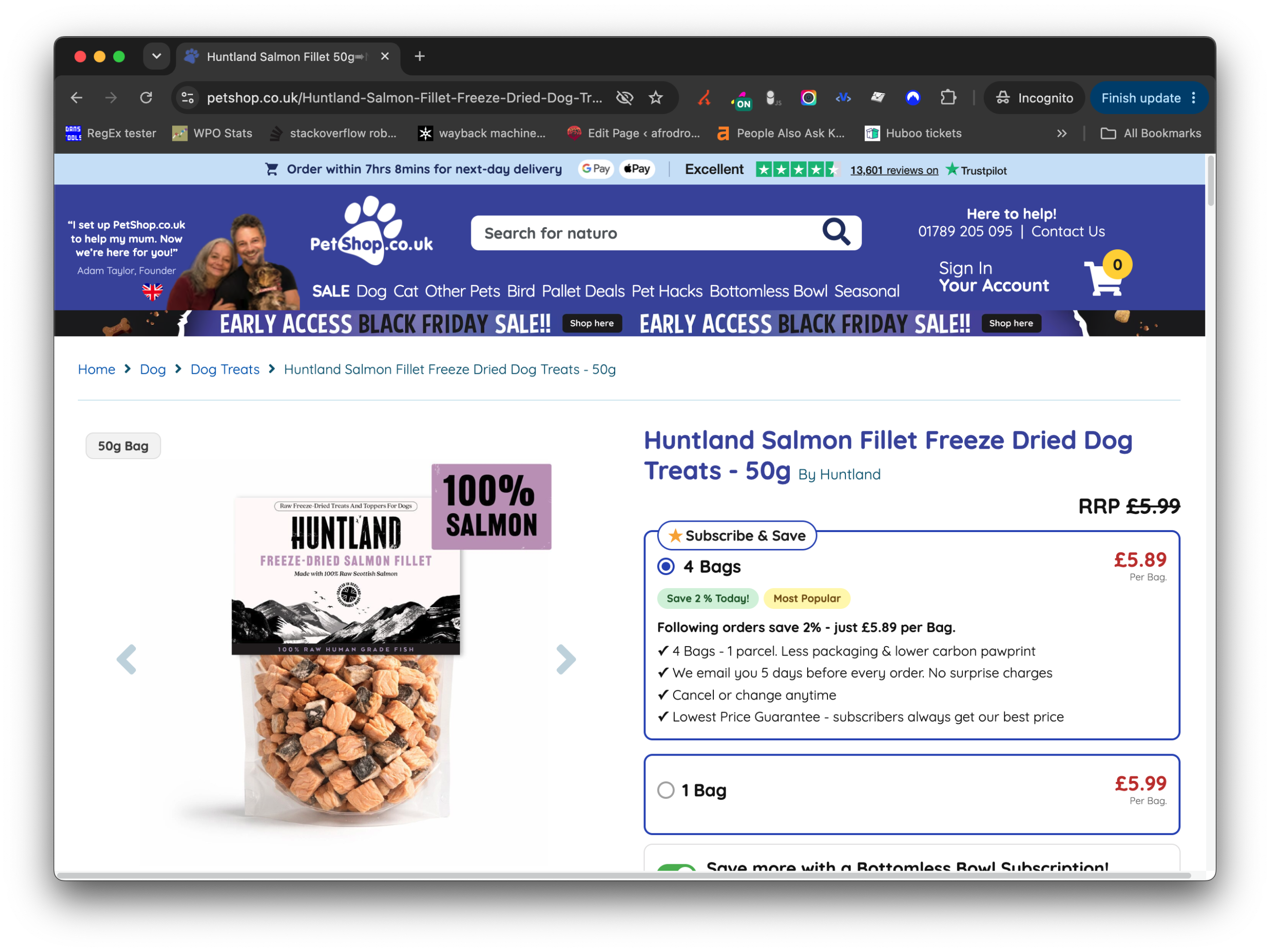
PetShop.co.uk is a popular pet retailer in the UK. However, their entire website demands that JavaScript is enabled before any of the website is visible and accessible.
JavaScript enabled no surprises here – everything looks fine:
JavaScript disabled:
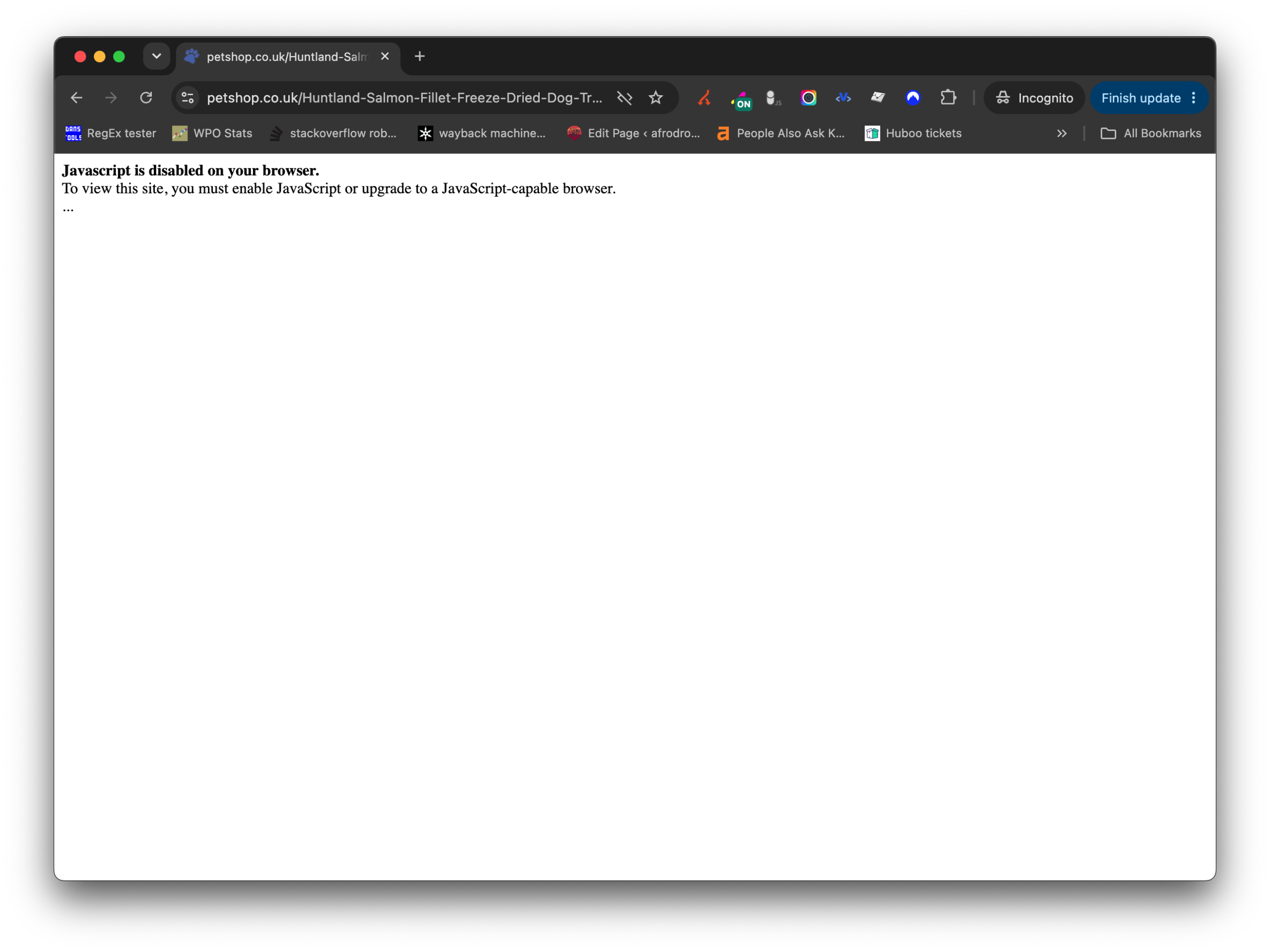
The whole website is inaccessible and all that shows is a message explaining that JS needs to be enabled to view and use the site. This message appears on every URL on the site when JS is disabled.
Forcing JavaScript to render to display some or all of your content is massively throttling your odds of being cited in AI search (outside of Google).
What makes matters worse for petshop.co.uk is even their HTML is compromised with minimal HTML output – most of which contains zero on-site content with JS disabled.
Optimise your product descriptions
This is even more important for ecommerce GEO if you’re an ecom brand as opposed to a reseller.
You can’t cheap out on your product descriptions. AI needs to understand what questions your product answers, what problems your product solves, who it’s for and how it’s positioned.
This makes it easier for AI to better understand your product so when a user is asking for help to find relevant products or a solution to a problem; your brand and product(s) are more likely to be cited and recommended.
Enrich your product feeds
AI agents, crawlers and LLMs don’t just scan and fetch your website’s content. They also analyse and process your product feeds too.
The descriptions you’re using in your feeds need to be comprehensive and full of relevant information to again help AI understand who your product is for and why it matters.
So many brands leave product feeds as basic entities, letting automated systems generate standard feeds that lack real context and data.
Product descriptions now must cover (beyond what the item actually is):
- Who it’s for
- Problem solving attributes (waterproof, designed for taller men, Ryanair carry-on approved etc)
- Relevant features (vegan, fragrance-free, 5-pack etc)
- Applicable use cases (great for emergency power cuts, reduces shedding from furry dog breeds etc)
Optimise your structured data
Include your product reviews, GTINs SKUs and brand – but to go further still, add additional property attributes that cover what’s not included in standard structured data. Things such as:
- Battery life
- IP rating if it’s water resistant / waterproof
- Compatibility (USB-C, Thunderbolt etc)
- Storage
- Weight etc
Check your Cloudflare / CDN settings
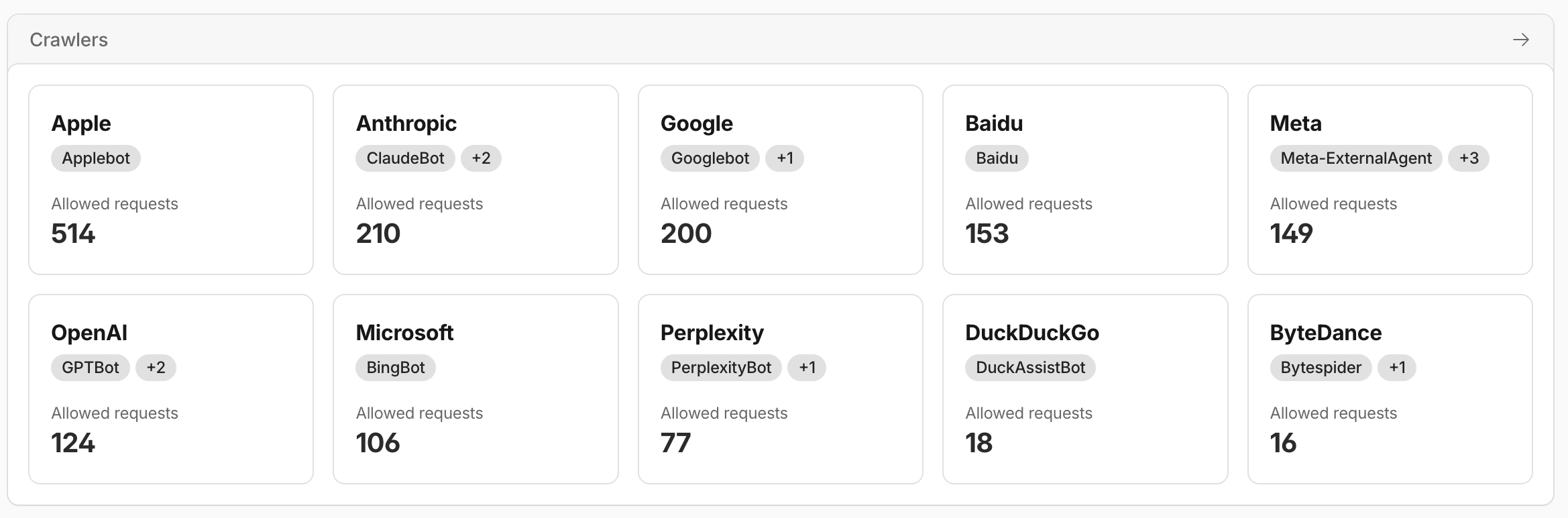
In this example above, Cloudflare is displaying bot and crawler requests from all major vendors in the last 24 hours for one of my domains.
Cloudflare allows AI traffic to access your website by default. However, a small handful of clients have AI agent access disabled, preventing them from crawling and understanding your website’s content and pages.
Understandably, some clients consciously want to prevent LLMs from accessing their site or parts of it, but if you’re wanting to improve your ecommerce GEO, keep them enabled.
Review Cloudflare’s Agent Readiness tool to improve AI visibility
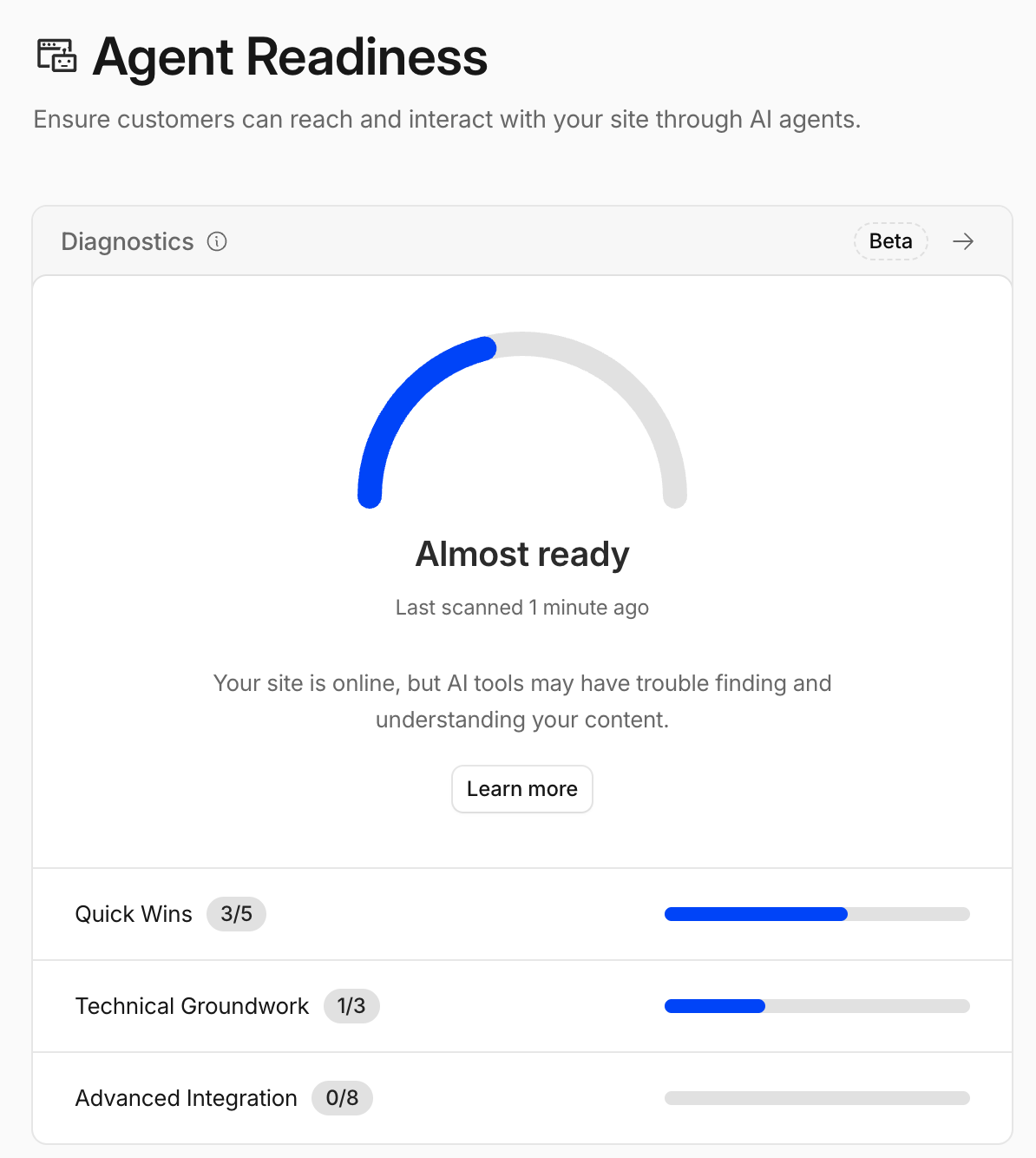
Cloudflare has tools (entirely free) to help you to understand just how optimised your domain is for AI search.
Not all parameters within the tool will apply, but it’s a great way to understand the changes and optimisations you can make on-site to improve your AI search optimisations.
Claim your domain in Business Hub by OpenAI
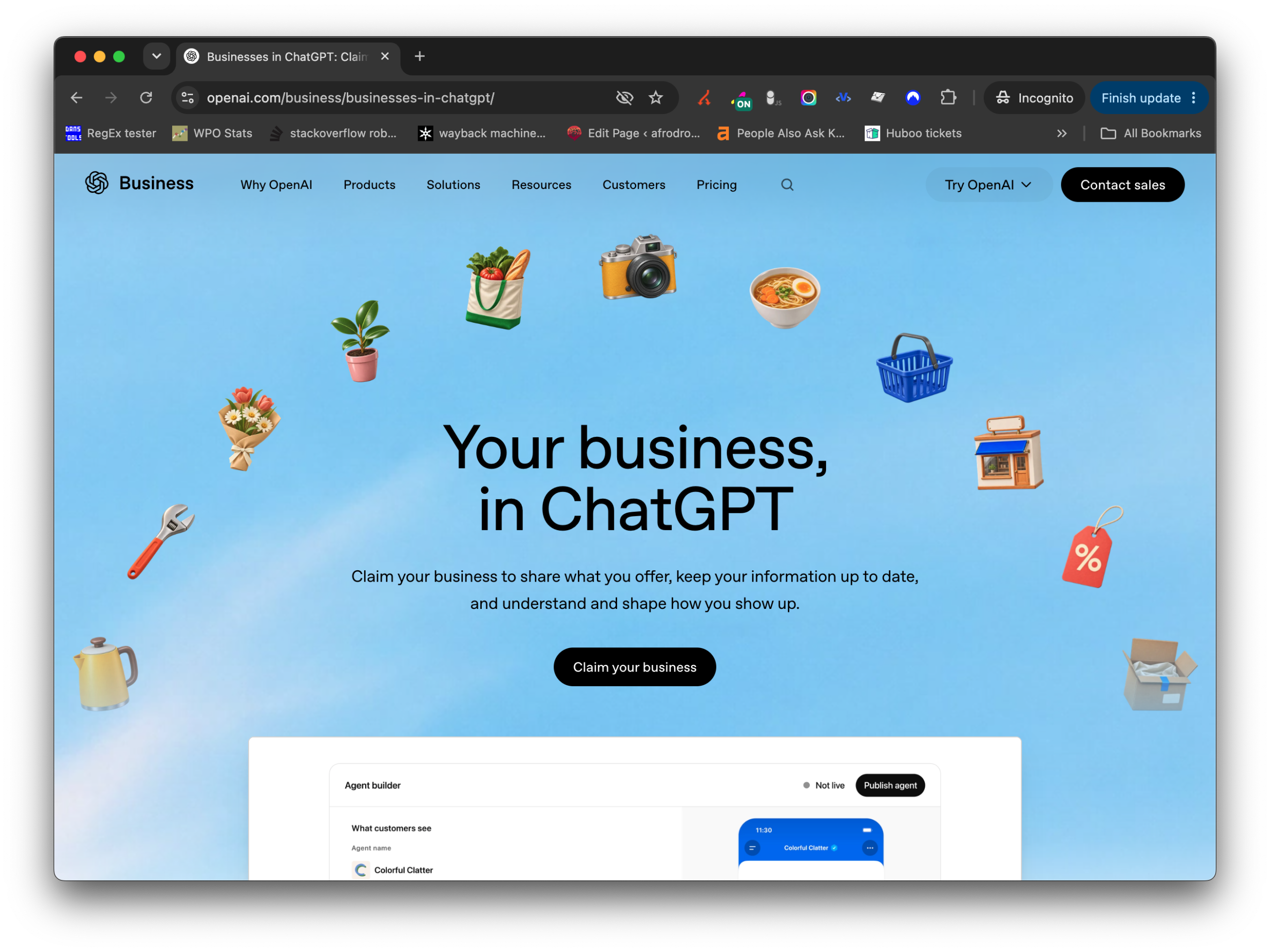
OpenAI have recently released a ‘Google Search Console’ for ChatGPT – you claim, register and verify your business and then you’re able to collect metrics including the number of citations your brand has captured.
There’s no proof to suggest that claiming a business gives you a ‘leg up’ over an unclaimed brand, but if nothing else, it’s additional data that’s otherwise noisy and loosely indicative at best via 3rd party tools.
Off-site optimisations for ecommerce AI search
As mentioned earlier, your off-site content and optimisations have more leverage and influence over increasing AI citations compared to on-site optimisations.
Here’s what’s important off-site to optimise your ecommerce store for AI search:
Invest in Digital PR
PR is one of the most powerful ways to capture more relevant citations for your brand in AI search.
Getting your product(s) featured in a ‘best x for y’ list in an authoritative publication can help improve your brand mentions when users are using AI search to find a suitable / best product for their needs.
Broader still, impartial 3rd party write-ups of your products and comparison guides is another way to influence and encourage citations.
What I will say is that PR is not a set and forget activity – LLMs may cite your brand from a relatively new publication.
However, a better and more recent piece that doesn’t include your products could supersede it at any time.
It’s therefore important to invest in PR consistently to give your citations longevity through new, positive 3rd party content from multiple sources.
Hype up, link to and share your collected product reviews
A sweeping statement, but if your product is as good as you say it is – your reviews should be a reflection of that.
Link to your reviews platforms. TrustPilot, reviews io, Feefo, whichever platform you leverage to collect customer reviews, make it as easy as possible for AI to pull the overall sentiments and associate those positive testimonials to your brand.
Last but not least, show up everywhere with good content
Reddit, Instagram, Facebook, TikTok, YouTube, LinkedIn (in no particular order) – be present and active on all of these platforms and have a unanimous approach to content across them.
Important – when I say to be present on these platforms, ads are not included. I’m referring to organic content only. AI doesn’t pay attention to your ad content, so that’s not relevant here.
That doesn’t mean copy one to another per se, but what I do mean is, AI (and humans) should be able to watch and read your content and immediately identify that it belongs to your brand and brand messaging. Your content should also be communicating a consistent message too.
In other words, if you’re a brand that manufactures and sells custom and high end leather goods online, don’t provide leather care advice on Instagram and then talk about textiles and polyester on YouTube – your content needs to be cohesive across the board.
On the topic of your social content – take the time to answer the questions that your customers ask you time and time again.
Using the leather example (and I’m no expert in leather here) but if your customers constantly ask you:
- How should I clean my leather designer handbag?
- What’s the difference between vegan and real leather?
- Do I need to condition the leather seats in my car?
- My leather sofa is stained, what do I need to clean it?
- Is x safe to clean y off leather?
- How do I get the leather smell back?
Take the time to create content addressing these key questions and problems. If your customers are constantly asking you offline, there’s a strong chance they’ll be asking those same questions online and in AI search too.
Answering those questions directly improves your chances of being cited and potentially linked to when users are using AI search or AI agents.
- PR
- Reviews
- Show up everywhere
Why UCP and ACP is critical in ecommerce GEO
Yes, more acronyms to have to remember – fun…
What’s UCP?
First up, UCP. It stands for Universal Commerce Protocol. Developed by Google, here’s why it matters.
It provided AI with a standardised set of data about your ecommerce store and its products including pricing, inventory, descriptions and more.
It essentially allows an AI agent (such as Google Gemini) to handle the discovery and purchasing of goods for a user without them having to leave the AI agent.
They can research, shortlist, compare and even complete their purchases directly inside their chat window.
AI agents can also be used to work as assistants – so if a product was out of stock and is now back in stock, AI can place an order for the AI user autonomously.
At the time of writing, UCP works with retailers like Wayfair and Shopify.
What’s ACP?
ACP is similar, the difference here is this was developed by OpenAI and Stripe whilst UCP is Google’s work.
For ACP – think frictionless checkout. A customer stores their card details safely within ChatGPT and it can complete purchases securely on a user’s behalf using the Stripe checkout.
Similarly, ACP also standardises product data via feeds which contain data such as pricing, inventory, images etc.
For both UCP and ACP technologies, they allow customers to use AI search to shop.
A working example
Let’s say a customer is using ChatGPT to find them a gift for a baby shower for their brother’s firstborn daughter.
“Find me a great baby shower gift for my soon-to-be-born niece for £200 or less.
It’s my brother’s first child and they would really value a gift that’s genuinely useful and helpful as first-time parents rather than a keepsake or the typical silverware gifts”
OpenAI would then use ACP to understand relevant products for the communicated budget and requirements and make relevant recommendations.
Should the user wish to purchase one or more of the suggestions, ChatGPT can do so on the user’s behalf using ACP to complete the purchase.
What platforms are UCP and ACP available on?
I’ve built a handy table to showcase (at the time of writing) which major platforms support ACP and UCP.
One word of warning – ACP, UCP and agentic checkout are changing at a rapid pace, so some of the data here may have progressed or evolved since writing:
Agentic commerce readiness
UCP vs. ACP support by platform
| Platform | UCP Google | ACP OpenAI / Stripe |
|---|---|---|
| Shopify / Shopify PlusHosted SaaS | Native | Agentic Storefronts |
| Co-developed UCP with Google; Google AI Mode, Gemini and ChatGPT channels are managed centrally in Shopify Admin. Since ChatGPT Instant Checkout was retired, ChatGPT purchases complete on the merchant’s own store via an in-app browser. | ||
| BigCommerceEnterprise SaaS | Rolling out | Via Stripe |
| Endorsed UCP at launch, with support still rolling out. ACP runs through BigCommerce’s Stripe Agentic Commerce Suite integration, and Feedonomics can export catalogs to both protocols. | ||
| Agentforce CommerceFormerly Salesforce Commerce Cloud | Native | Via Stripe |
| UCP-powered checkout on Google AI Mode and Gemini is generally available from September 2026. ACP support was built with Stripe around ChatGPT Instant Checkout, so confirm current scope with Salesforce. | ||
| WooCommerceWordPress open-source | Third-party plugin | Stripe extension |
No native support in WooCommerce core. UCP needs a third-party plugin to serve the /.well-known/ucp manifest. ACP comes via Stripe’s Agentic Commerce Suite in the official Stripe for WooCommerce extension, which is still rolling out. |
||
| Magento / Adobe CommerceOpen-source & PaaS | Committed | Committed |
| Adobe committed to both protocols in February 2026, but native support is still being built. In the meantime, merchants rely on third-party modules or custom REST/GraphQL work. | ||
| WixSMB website builder | Not confirmed | Built in via Stripe |
| The first CMS to sign the Agentic Commerce Protocol, with selling to AI agents through Wix’s Stripe Agentic Commerce Suite integration, rolling out to eligible merchants. No platform-specific UCP launch confirmed yet. | ||
| SquarespaceSMB website builder | Not confirmed | Announced |
| Named as a Stripe Agentic Commerce Suite platform partner and ACP endorser, but merchant-facing availability isn’t confirmed. No platform-specific UCP launch confirmed yet. | ||
| commercetoolsComposable / headless | Via Agentic Commerce | Via Agentic Commerce |
| commercetools’ Agentic Commerce product covers emerging protocols, including Google AI Mode and Gemini, without separate integrations. It was also a Stripe Agentic Commerce Suite launch platform. Confirm exact capabilities with commercetools. | ||
UCP = Universal Commerce Protocol (Google AI Mode & Gemini). ACP = Agentic Commerce Protocol (OpenAI & Stripe). ChatGPT Instant Checkout was retired in March 2026; ACP now mainly powers ChatGPT product discovery and Stripe’s Agentic Commerce Suite. Status as of November 2026.
The good news is, if you’re on Shopify, the enablement of these two technologies is already taken care of.
Is ecommerce SEO & ecommerce GEO the same?
Let me address the elephant in the room. No – they’re not the same. They leverage different approaches. However, ecommerce GEO is an integral component of what good ecommerce SEO is.
Ecommerce SEO, by definition, is optimising ecommerce for search. In other words, improving visibility, clicks, traffic and sales from organic traffic sources.
AI search is just another ‘branch’ of that same umbrella definition
To put it another way – if an electric car is still a ‘car’ then ecommerce GEO is still ecommerce SEO.
Sure, there are differences as I’ve detailed above, but if I’m working with a client on improving their SEO, the GEO component is inclusive.
In summary
If you’re wanting your ecommerce brand to be cited, linked and mentioned more frequently and introduced to new audiences who’re looking for solutions to the problems that you can solve, you need to optimise your website for AI search.
Just being on Shopify isn’t enough – (although it’s the most progressive platform for AI search out of the box).
Just having a strong technical onsite foundation isn’t enough.
More importantly, and the mistake that many brands seem to be making causing more harm than good, creating blog posts en masse isn’t ‘GEO’.
To win in AI search there are many levers to pull on and a seemingly endless number of touch points to refine and optimise to improve your visibility.
You can’t pick and choose, you’ve got to do it all, do it well and do so consistently.
Brands that understood this even before the rise of AI search are the brands that are reaping the rewards now.
Ecommerce brands that understand it’s about good branding, good marketing and consistent messaging with a platform agnostic approach are the ones that are ahead of the curve.
Arguably, that’s nothing new…
